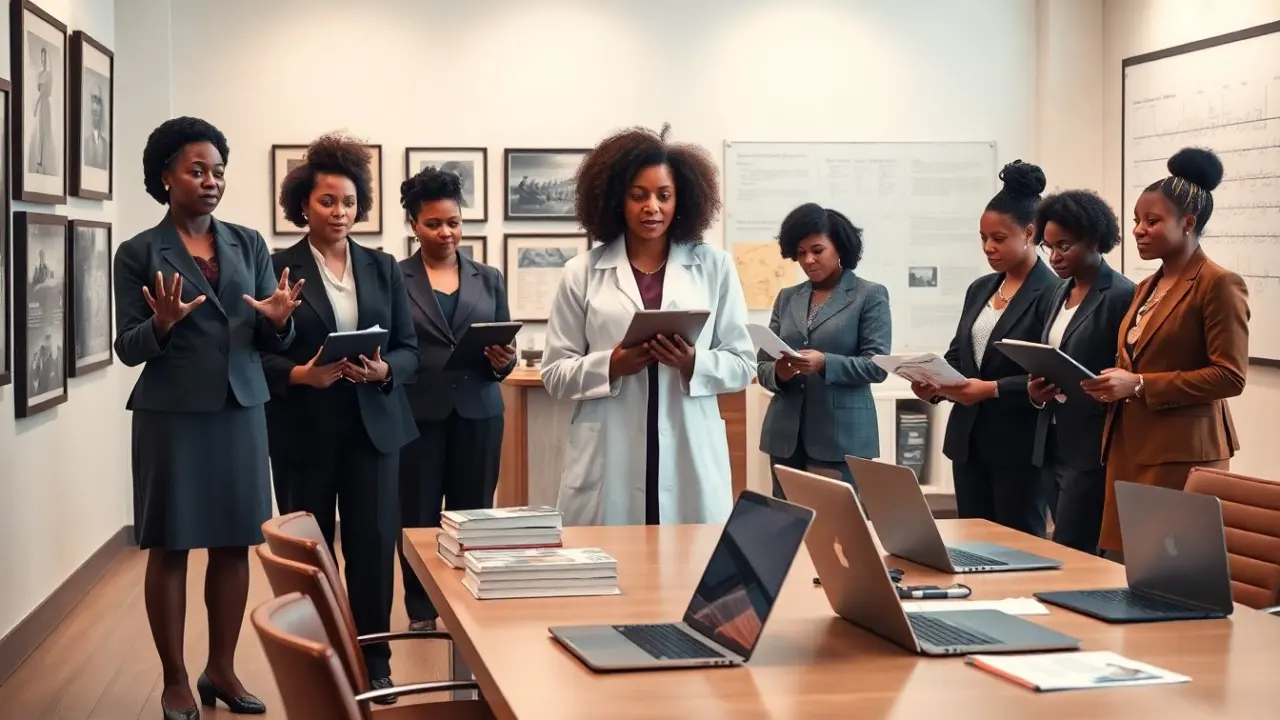
Black female role models in history appear throughout this account. The article lists leaders, scientists, artists, athletes, and elected officials. It shows their actions, their struggles, and their impact. It names key figures and links their lives to present-day work. It aims to teach readers who want clear examples of courage, skill, and service.
Key Takeaways
- Black female role models in history have led transformative movements in abolition, education, and civil rights, demonstrating courage and strategic activism.
- These women founded institutions, influenced policy, and used grassroots organizing to challenge social norms and advance justice.
- Pioneers in science, arts, sports, and politics set professional standards, broke barriers, and mentored future generations through leadership and public platforms.
- Their legacies inspire modern teaching methods, activism strategies, and scholarship that connect historical tactics to current social campaigns.
- Resources like archives, museums, and digital collections preserve the stories and contributions of black female role models in history for education and activism.
Groundbreaking Leaders In Abolition, Education, And Civil Rights
Black female role models in history include women who led abolition and education movements and civil rights campaigns. Harriet Tubman freed people and guided them to safety. Sojourner Truth argued for abolition and women’s rights in public speeches. Ida B. Wells exposed lynching and organized campaigns for justice. Mary McLeod Bethune founded schools and advised presidents on education policy. Ella Baker coordinated grassroots work and trained local leaders.
Other notable leaders expanded access to education, public health, and voting: Mary Church Terrell fought for desegregated schools and civic inclusion; Fannie Lou Hamer organized voter registration drives and publicized the violence Black voters faced in the Jim Crow South; Dorothy Height built programs addressing women’s employment and community uplift; and Rebecca Lee Crumpler, the first Black woman physician in the United States, provided medical care to formerly enslaved people and poor families in the 19th century. Together these women used institutional building—founding schools, clubs, civic leagues, and newspapers—to create durable platforms for change.
These women built institutions and trained others. They founded schools, newspapers, and clubs. They wrote, spoke, and organized protests. Their work created legal and cultural change. They challenged laws and social norms. They demanded voting rights, equal schooling, and fair treatment. Legal strategies and litigation, national conferences, and grassroots voter education were all part of a multi-pronged approach that combined local organizing with national advocacy.
Black female role models in history often risked arrest, violence, and loss of income. They used networks of churches, clubs, and families. They trained new leaders who continued the work. Their methods included petitions, legal challenges, boycotts, and voter drives. They taught tactics that later movements used. The emphasis on mentorship—running training institutes, hosting workshops, and cultivating local leadership—meant that their tactics diffused widely and adapted across regions and generations.
Today historians and teachers include their stories in classrooms. Museums display their letters and photos. Local groups hold events to honor their work. Schools use their strategies in civics lessons. Their examples show how sustained action produces policy change and social shifts. Researchers continue to mine archival collections—personal papers, organizational records, newspapers—to recover lesser-known activists and place well-known leaders in broader community networks.
Pioneers In Science, Arts, Sports, And Politics
Black female role models in history also appear in science, arts, sports, and politics. Katherine Johnson calculated trajectories that helped win space missions. Mae Jemison worked as an astronaut and promoted STEM education. Zora Neale Hurston wrote novels and preserved folk traditions. Toni Morrison won a Nobel Prize for literature and explored history and identity. Josephine Baker performed internationally and used fame for civil rights.
In science and medicine, women such as Henrietta Lacks (whose cells contributed to biomedical research) and Rebecca Lee Crumpler expanded the boundaries of medical knowledge and highlighted ethical questions in research and care. Black women mathematicians and technicians at NASA—often called “human computers”—paved the way for later generations of engineers and scientists through both technical work and mentorship programs. Programs today that aim to increase representation in STEM frequently cite these historical precedents when designing curricula and outreach.
In sports, Althea Gibson and Wilma Rudolph broke barriers in tennis and track. They won championships and opened doors for future athletes. In politics, Shirley Chisholm ran for president and served in Congress. Barbara Jordan spoke for the rule of law and equality on national stages. These women used public platforms to change perceptions. Alongside them, local elected officials, state legislators, and community leaders carved out policy victories—from anti-discrimination ordinances to investments in schools—that cumulatively shifted institutional practices.
These pioneers created paths for younger generations. They set professional standards, earned awards, and led institutions. They started programs to support students and artists. They spoke at schools and consulted with policymakers. They published research, essays, and books that continue to inform scholarship. Mentorship and formal programs—scholarships, fellowships, artist residencies, and youth sports leagues—helped to institutionalize opportunity and make excellence visible to aspiring students and professionals.
Black female role models in history also mentored others. They funded scholarships, offered apprenticeships, and led community workshops. They formed professional networks that produced new leaders in science, arts, sports, and politics. Their reputations attracted media attention and helped shift public opinion. The ripple effects of these networks are visible in contemporary professional associations, alumni groups, and community-based mentorship initiatives that explicitly trace their lineage to earlier trailblazers.
How Their Legacies Inspire Today — Teaching, Activism, And Resources To Learn More
Black female role models in history inspire teaching, activism, and study today. Schools adopt lesson plans that profile these women. Community organizations host panels and reading groups. Activists use their tactics and speeches in modern campaigns. Scholars digitize letters and publish biographies to widen access. Museums and cultural centers mount exhibitions that connect past strategies to contemporary movements, illustrating continuity in organizing methods and rhetorical strategies.
Teachers use primary sources to teach critical thinking. They assign letters, speeches, and court records. They ask students to compare strategies then and now. Youth groups model voter-registration drives on earlier campaigns. Libraries curate displays that highlight work in local communities. Practical classroom activities include timeline projects that trace intergenerational mentorship, role-play simulations of organizing meetings, and research assignments that ask students to situate a local leader in national movements.
Activists borrow tactics such as petitions, sit-ins, and coordinated boycotts. They adapt these tactics for social media and public health campaigns. Nonprofits combine legal work with direct service in the model of past organizers. Funders support projects that build leadership in low-income neighborhoods. Contemporary efforts also emphasize coalition-building across movements—linking labor, education, health, and environmental justice—echoing the intersectional organizing many Black women practiced historically.
To learn more, readers can consult school curricula, university archives, and museum collections. The Library of Congress and the National Archives hold digitized documents. Local historical societies preserve oral histories and photos. Online platforms host recorded interviews and documentary films. Recommended approaches for further study include examining primary-source collections (letters, meeting minutes, photographs), reading biographies and autobiographies by and about these women, and attending local lectures or community history events that surface lesser-known figures.
Black female role models in history continue to affect law, culture, and policy. Their lives offer concrete examples of leadership and decision-making. Their archives provide materials for class projects and activist plans. Their stories offer clear models for people who want to act, teach, or study. By tracing institutional legacies, mentorship networks, and the everyday tactics of organizing, educators and organizers can draw practical lessons for building sustainable movements and inclusive professional pathways today.