famous women in history for kids helps children learn courage, curiosity, and change. This article names three famous women in history for kids and gives short stories and fun facts. The text uses clear facts and simple language. It aims to spark interest and invite questions. Each profile shows one key idea that a child can remember.
Key Takeaways
- Famous women in history for kids teach valuable lessons about curiosity, courage, and action through memorable stories.
- Marie Curie’s curiosity led to discoveries in radioactivity and medical advances, inspiring children to explore science.
- Harriet Tubman demonstrated courage by leading many to freedom without losing a single person, showing leadership and bravery.
- These profiles use simple language and fun facts to make historical figures engaging and easy for kids to remember.
- Parents and teachers can use these stories to encourage questions, experiments, and projects that connect key ideas to real-life outcomes.
Why These Women Matter: Big Ideas Kids Can Understand
These profiles focus on three lessons. The first lesson is curiosity. Children learn this from scientists who test ideas. The second lesson is courage. Children learn this from people who stand up for others. The third lesson is action. Children learn this from leaders who change rules and habits. The list uses short stories and clear facts. The list helps kids connect a life story to a simple idea. Each story links one action to one result so a child can repeat the idea. Parents and teachers can use these profiles as a starting point for questions and projects. The profiles include one fun fact to make each person memorable. The profiles use plain language so a child can read them aloud and tell a friend about the famous women in history for kids.
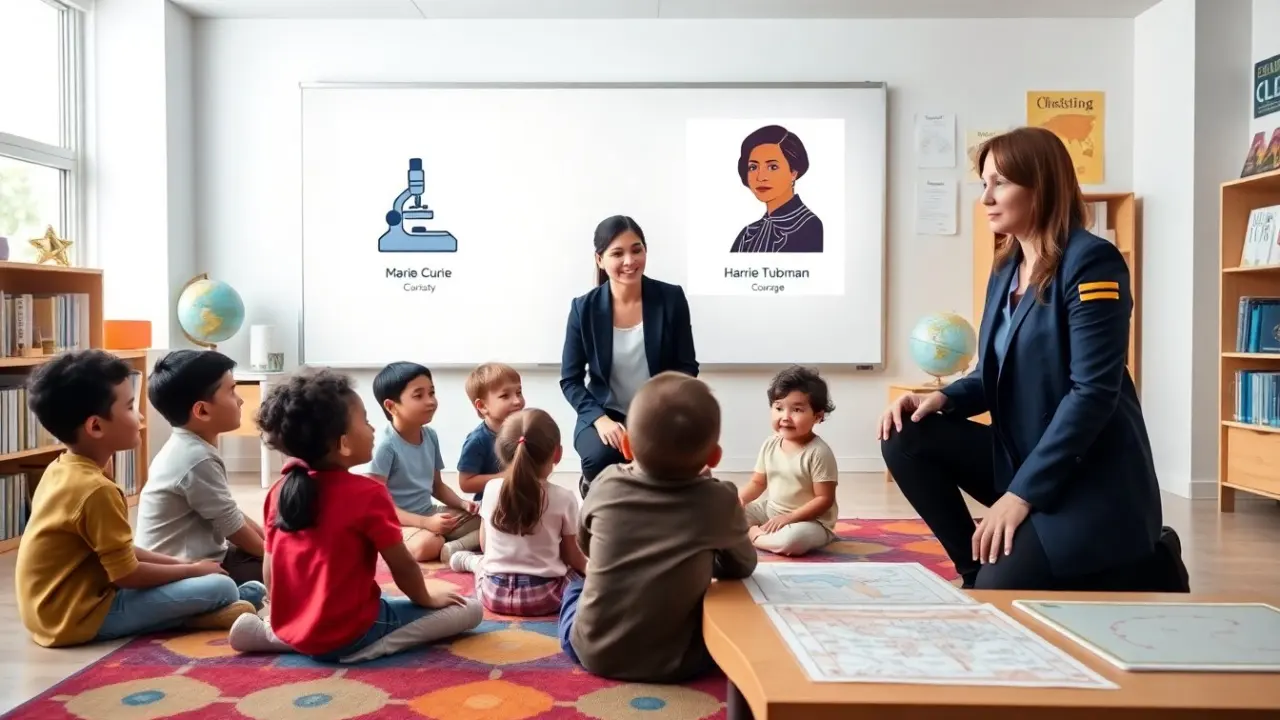
To make these big ideas easier to use in the classroom or at home, try pairing each short profile with one hands-on activity and one discussion question. For example, after reading about a scientist, children can do a safe observation experiment; after reading about a leader, children can role-play making a plan to help others. A short timeline or picture can help younger learners see when each person lived and the kinds of challenges they faced. These simple supports help the main idea stick so famous women in history for kids become stories children remember and share.
Marie Curie — Scientist Who Changed Medicine
Marie Curie taught children that curiosity leads to discovery. She studied radioactivity and found new elements. She won two Nobel Prizes for physics and chemistry. She shared her work with doctors who treated injured soldiers. She opened mobile X-ray units during war and helped save many lives. She faced many barriers as a woman in science. She kept working in a small lab and she published careful reports. She trained students and she built a research institute in her city. A simple fact makes her story stick: she carried heavy equipment across rough roads to set up X-ray stations. A fun fact for kids: she named one element polonium after her home country. Parents can ask: what idea did she test? Children can try a safe experiment on minerals and magnets to see how scientists ask questions. This story links one idea to one outcome and shows why famous women in history for kids include Marie Curie.
To expand the lesson, explain how scientists work in teams and keep careful notes so others can check their results. You can create a mini lab activity where children make careful observations (for example, comparing how different materials block light) and write one sentence about what they learned. Talk about how Marie Curie kept going even when experiments were hard, and ask: what helps you keep trying when a project is difficult? These concrete steps turn Curie’s life into a clear idea children can use: curiosity plus careful work can help people solve problems that matter to others.
Harriet Tubman — Courageous Leader Who Fought For Freedom
Harriet Tubman taught children that courage leads to freedom. She escaped slavery and then she returned many times to free others. She guided groups along secret routes and she used songs and signals to keep people safe. She served as a scout and nurse during the Civil War and she helped plan missions. She knew the land and she planned careful trips at night. She refused offers to buy her freedom and she chose to free others instead. A simple fact makes her story stick: she never lost a person on the trips she led. A fun fact for kids: people called her Moses because she led many people to safety. Parents can ask: how did she protect people during the trips? Children can map a route and mark safe places to show planning and care. This story links one action to one result and shows why famous women in history for kids include Harriet Tubman.
To make Tubman’s example practical for kids, try a mapping activity where children draw a path from a starting point to a safe place and label the steps they would take to stay safe. Discuss ideas like planning, asking for help, and using quiet signals. Emphasize how courage often includes careful thinking and teamwork, not just bold action. You can also read a short, age-appropriate timeline of Tubman’s life so children see how her choices led to later work as a community helper and leader. These additions help the idea of courage feel concrete and useful for young learners exploring the topic of famous women in history for kids.