Songs about women’s rights open doors to change and bring people together. This list shows 25 tracks that spoke for equality, safety, and choice. The songs span decades and styles. They document struggle, wins, and ongoing work. Readers will find historical context, key artists, and the messages that moved crowds and laws. Beyond the list, understanding why and how music mattered helps explain how a handful of melodies could shape ballots, courts, workplaces, and culture.
Key Takeaways
- Songs about women’s rights have historically united activists and influenced public opinion and policy by making private struggles public and memorable.
- Early 20th-century suffrage and labor songs used simple melodies and clear demands to spread messages of voting rights, fair pay, and workplace safety.
- Contemporary women’s rights songs use diverse genres and digital platforms to address workplace abuse, reproductive rights, and intersectional issues, reaching global audiences rapidly.
- Musicians amplify the movement by drawing media attention, fundraising, and fostering community through live performances and social media engagement.
- Modern artists often rework classic anthems, linking historic struggles to present-day issues, thus keeping the conversation about women’s rights relevant and ongoing.
Why Music Has Been Central To Women’s Rights Movements
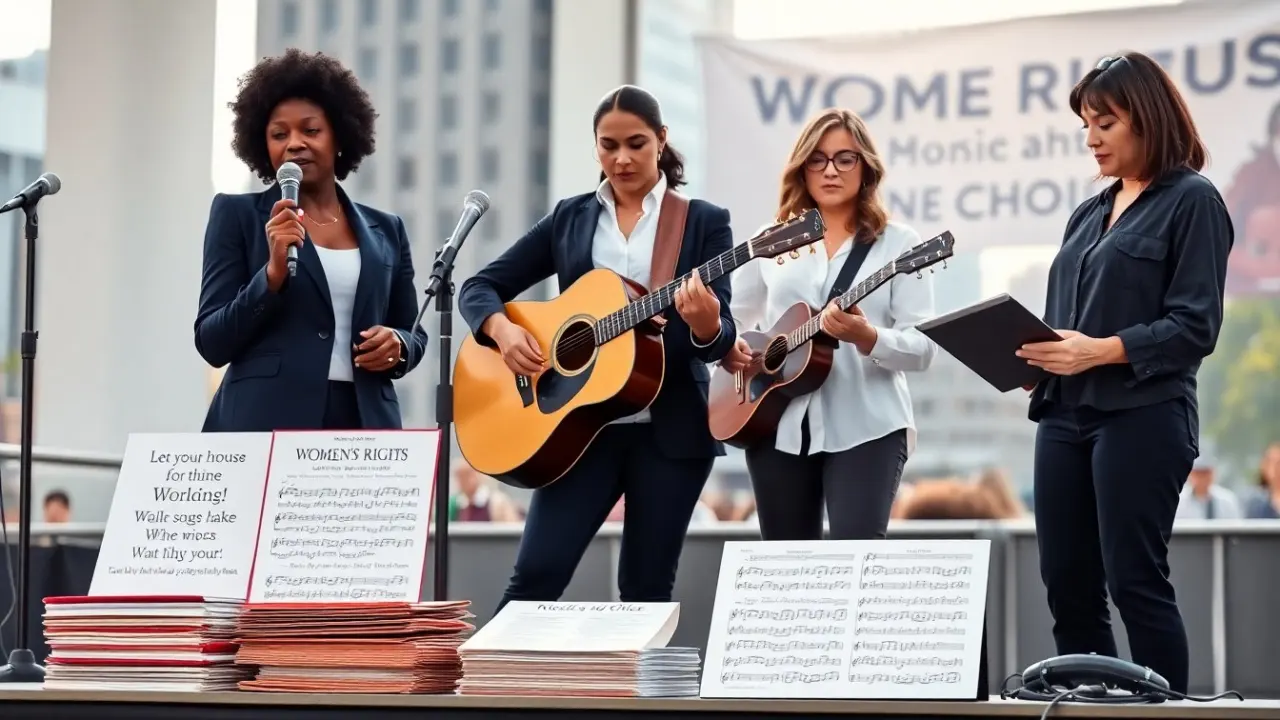
Music gives groups a shared voice. It helps people learn songs fast. Activists used songs to teach ideas, rally crowds, and mark events. Songs about women’s rights made private pain public. They turned single stories into social pressure. Leaders used folk, gospel, and punk to spread facts and demands. Broad radio play pushed some songs into living rooms. That reach changed public views and influenced policy. When a chorus repeats a call for equal pay, listeners remember the demand. When a verse names abuse, listeners name the abuser. Music cut distance between the movement and voters. Musicians also brought credibility. A well-known singer could draw large crowds and media. That presence amplified organizers’ asks and raised funds. Songs kept energy high at marches and meetings. They also comforted people who felt alone. That mix of education, fame, and emotion explains why songs about women’s rights remain central.
Beyond rallies and radio, songs created durable cultural references that activists could borrow. Melodies and refrains travelled easily from one protest to another; a tune learned in a factory hall could be sung at a march the next week. That portability made songs practical organizing tools: simple structure, repeatable lines, and call-and-response formats let large groups participate without formal rehearsal. Folk collectors and early recording projects then preserved many of these tunes, turning ephemeral protest music into a recorded archive that later generations could study and reinterpret.
Music also served as a teaching tool. Workshops and choir groups used songs about women’s rights to explain complex issues—voting law, labor protections, reproductive policy—in accessible language. Classroom lessons, union trainings, and community meetings often incorporated singing as a way to build solidarity and memory. And because music engages emotion, it can change hearts as well as minds: a well-placed lyric can shift how someone imagines a law’s human impact, helping translate policy debates into everyday terms.
Classic Anthems From The 20th Century
This section highlights major tracks from early suffrage days through second‑wave feminism. Each song shows how artists reflected and shaped public debate about gender, work, and law.
During the first decades of the 20th century and into the interwar years, suffrage songs and labor ballads served direct organizing purposes. With plain language and memorable refrains, these pieces encouraged turnout at parades and meetings and named specific legal goals—most commonly the right to vote and basic workplace protections. As recording technology matured, some of those songs reached audiences beyond local scenes, helping to nationalize particular tactics and demands.
By mid-century, new genres and media expanded the repertoire of songs about women’s rights. Gospel choirs, folk revivalists, and early popular-songwriters adapted movement language into different musical idioms, broadening appeal. In the second wave of feminism, artists used rock, soul, and singer-songwriter forms to interrogate marriage laws, workplace discrimination, and cultural stereotypes. Anthems from this era often mixed personal testimony with political analysis, turning intimate experiences into collective calls for legal and social reform.
Classic anthems also reveal a pattern of adaptation: tunes and lines moved between movements and generations. A chorus that began in a union hall could later appear in a campus rally or a recorded album; melodies were often repurposed with new verses to fit changing priorities. This continuity helped link earlier suffrage efforts to later campaigns for reproductive rights, equal pay, and protection from violence—showing a threaded history in which songs about women’s rights both recorded and propelled change.
Early Suffrage And Labor Songs That Laid The Groundwork
Early activists used simple tunes to teach votes and labor rights. Labor choirs sang on picket lines. They sang songs about safety, fair pay, and the vote. Those songs included local verses that named companies and bosses. Singing helped workers keep pace during long strikes. Folklorists later recorded many of these tracks. Recordings preserved lyrics about suffrage parades and union halls. In the 1910s and 1920s, women added lines about citizenship and legal status. That change made the songs political and personal. Songs about women’s rights in this era used plain language and clear asks. They asked for voting access, equal work rules, and school access. Organizers reused melodies so new crowds could join quickly. That reuse helped the message spread across states. Musicians who supported suffrage often faced backlash. Still, their songs reached newspapers and public events. Those early tracks set a pattern: music could push law and practice at the same time.
Scholars and archivists have since used those early collections to map how the repertoire traveled: through labor networks, women’s clubs, and touring performers who linked local efforts into regional campaigns. That archival record is important for understanding how a grassroots melody could become an emblem of a larger cause. It also provides material that contemporary artists draw on when they rework older lines into new protest songs about gender and justice.
Contemporary Tracks And Emerging Voices Carrying The Torch
Modern artists continue to write songs about women’s rights. They mix pop, hip‑hop, and electronic styles. They address workplace abuse, reproductive choice, and gender identity. Streaming platforms help new voices reach global audiences fast. Social media lets artists post raw takes and organize fans for protests. Contemporary songs often use specific case studies and legal language. That detail makes issues easier to follow for listeners. Collaborations across countries show common themes and local differences. New songs about women’s rights also focus on intersectional issues like race and class. Producers and labels now face public pressure to support artists who sing about rights. That pressure leads to festival lineups that reflect diverse views. Live shows create visible solidarity at scale. Artists also donate proceeds to legal funds and advocacy groups. Those moves turn songs into direct support for causes. Young musicians keep reworking older anthems. They sample classic lines and add new verses that name current law and events. This practice keeps the message alive while updating it for new audiences. It also helps listeners trace a clear line from early suffrage songs to today’s hits.
In the digital age, the lifecycle of a rights song can be rapid: a track released independently can be shared widely within days, repurposed into protest playlists, remixed by other artists, and used as the soundtrack for organizing videos. That speed allows musical responses to align closely with legal and cultural moments—court rulings, high-profile trials, legislative debates—so songs about women’s rights can become part of the real-time conversation. At the same time, recorded work, dedicated playlists, and themed concerts ensure that these songs aren’t only episodic but can form durable resources for movement education.
At the same time, there are limits and debates. Not every protest song becomes an anthem, and some artists must navigate backlash or co-option when commercial interests intersect with activism. Critics also note the importance of centering the voices most affected by the issues—ensuring that songs about women’s rights are not only performed by sympathetic outsiders but are led by those living the struggles. Movement builders and musicians increasingly acknowledge this responsibility, creating mentorship programs, community recording projects, and collaborative tours that amplify emerging voices from diverse backgrounds.
Looking forward, songs about women’s rights will likely keep evolving as genres change and technologies shift. What remains constant is music’s ability to translate complex legal and social questions into lines people can sing, share, and remember—making it an enduring tool for advocacy and cultural change.