The women’s history month bulletin board gives teachers a clear way to highlight women’s achievements. It invites students to learn, reflect, and add their own voice. The board should show diverse figures, simple facts, and visual cues. It should stay readable and active. Teachers can assemble a strong display with low-cost supplies and one planning session.
Key Takeaways
- A women’s history month bulletin board should have a clear, inspiring theme that guides content and student activities.
- Use large, bold images and concise facts to create an eye-catching and readable display with simple, consistent colors.
- Incorporate interactive elements like student notes, scavenger hunts, and QR codes to make the board engaging and dynamic.
- Link the bulletin board to short lessons and assessments to reinforce learning and demonstrate student progress.
- Keep the design quick to assemble with common classroom supplies, ensuring it remains neat and inviting throughout the month.
- Highlight diverse women’s achievements to promote reflection, student contribution, and inclusive education.
Purpose And Theme: Choosing A Focus That Inspires
A teacher selects a clear theme for a women’s history month bulletin board. The theme guides image choice, text length, and student tasks. A class picks a theme that matches grade level and standards. Options include “Inventors and Innovators,” “Local Leaders,” “Unsung Heroes,” or “Voices in Science.” Each theme narrows the research scope. Teachers set a simple learning goal. The goal might ask students to name three contributions for each featured woman or to compare two figures. Teachers limit the text to short facts and one key quote per person. Short facts keep the board legible from across the room. The teacher uses large type and high-contrast colors to improve readability. The teacher adds an age-appropriate map or timeline to give context. The timeline helps students place events in order. The map links people to places. This structure makes the women’s history month bulletin board focused and useful for instruction.
Design And Materials: Simple, Eye‑Catching Layouts Teachers Can Build In An Hour
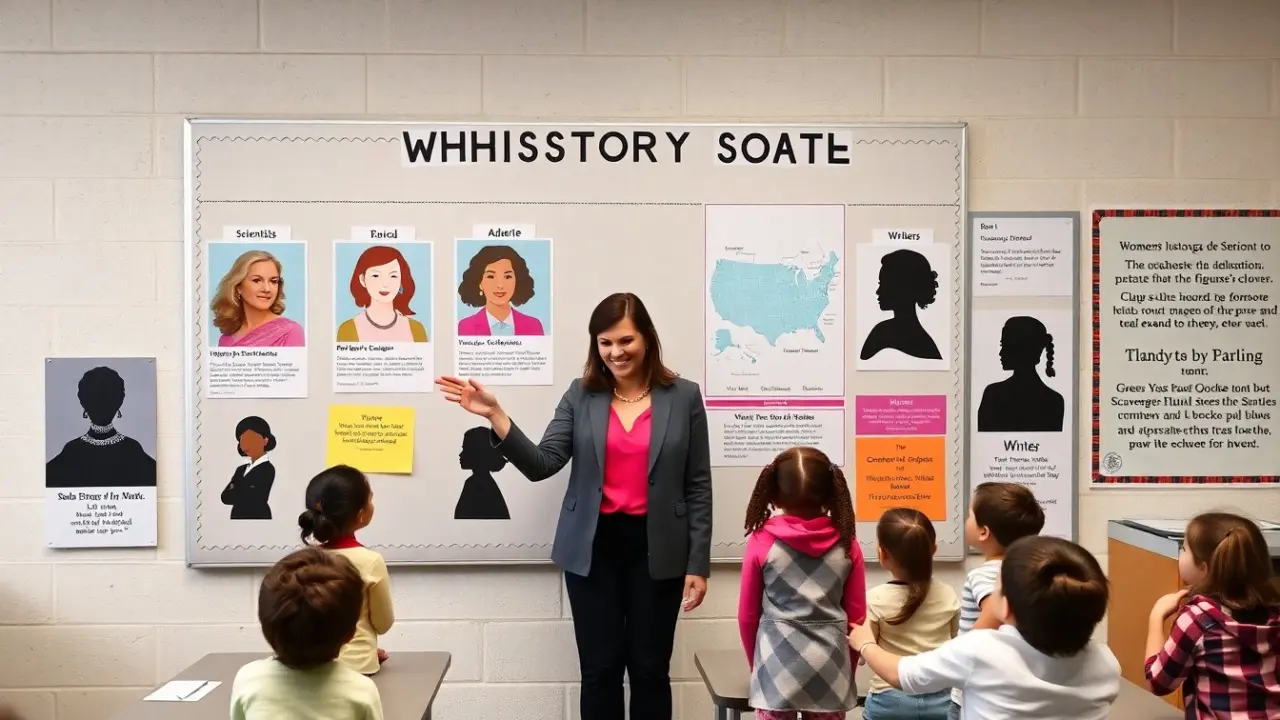
A teacher chooses three to six focal images for a women’s history month bulletin board. The teacher prints bold portraits or uses cutout silhouettes. The teacher uses a neutral background and three accent colors for consistency. Large headshots grab attention. Short labels provide name, date, and one contribution. The teacher uses cardstock for durability. The teacher adds pre-cut letters for a clear title. Foam tape gives a slight 3D effect. The teacher laminates high-touch items for repeated use. The teacher gathers supplies that most classrooms already have: scissors, glue sticks, markers, a stapler, and push pins. The teacher plans layout on a desk before attaching pieces. The teacher spaces items evenly and leaves breathing room around each element. The teacher uses icons, like a magnifying glass for scientists or a book for writers, to cue categories. The teacher places an interactive pocket or envelope on the board for student notes. That pocket invites ongoing engagement without changing the core design. This approach keeps the women’s history month bulletin board quick, neat, and attractive.
Interactive Elements And Student Contributions
A teacher adds hands-on pieces to make the women’s history month bulletin board active. The teacher pins sticky notes for student questions. The teacher includes a “Who I Admire” ribbon students can write on and attach. The teacher posts a short scavenger hunt with three clues tied to figures on the board. Students answer the clues and deposit slips in a drop box. The teacher rotates spotlight profiles weekly to keep the board current. The teacher invites small groups to research one woman and prepare a two-sentence summary. The teacher posts those summaries beside the portraits. The teacher adds a small audio QR code students can scan to hear a short biography read aloud. The teacher uses simple technology to reach different learners. The teacher maintains a tidy contributions area to keep the display readable. These choices let the women’s history month bulletin board reflect student voice and class learning.
Lesson Connections And Assessment Ideas
A teacher links the women’s history month bulletin board to short lessons. The teacher uses the board for a quick bell ringer about one figure. The teacher plans a five-minute reading that uses a board profile as a text. The teacher assigns a compare-and-contrast exit ticket for two featured women. The teacher uses rubrics for short oral presentations based on board research. The teacher gives a checklist for research skills: source note, one fact, and one image credit. The teacher grades only the checklist items to keep assessment simple. The teacher asks students to reflect in a learning log about what surprised them. The teacher measures growth by comparing initial notes to final reflections. The teacher updates the women’s history month bulletin board to show student work and assessment artifacts. This practice ties the display to clear instructional outcomes.