Women’s rights symbols appear across flags, posters, and jewelry. This guide lists common women’s rights symbols and explains their origin and meaning. It helps readers identify symbols and use them with respect. The text stays clear and simple. It suits readers who want quick, accurate information about visual signs of women’s rights.
Key Takeaways
- Women’s rights symbols like the raised fist and Venus symbol have deep historical roots and represent unity and gender identity.
- Contemporary symbols such as the pink pussyhat and green scarf visually unite movements for gender equality and abortion rights.
- Using women’s rights symbols respectfully requires understanding their origins, crediting communities, and avoiding appropriation.
- Effective symbol use involves clear communication, audience testing, and pairing symbols with calls to action to drive social change.
- Designers and organizers should prioritize visibility and inclusivity by using high-contrast colors and readable graphics.
- Educators and media play crucial roles in explaining symbols to foster respect and maintain their meaningful impact.
Key Historical Symbols And Their Origins
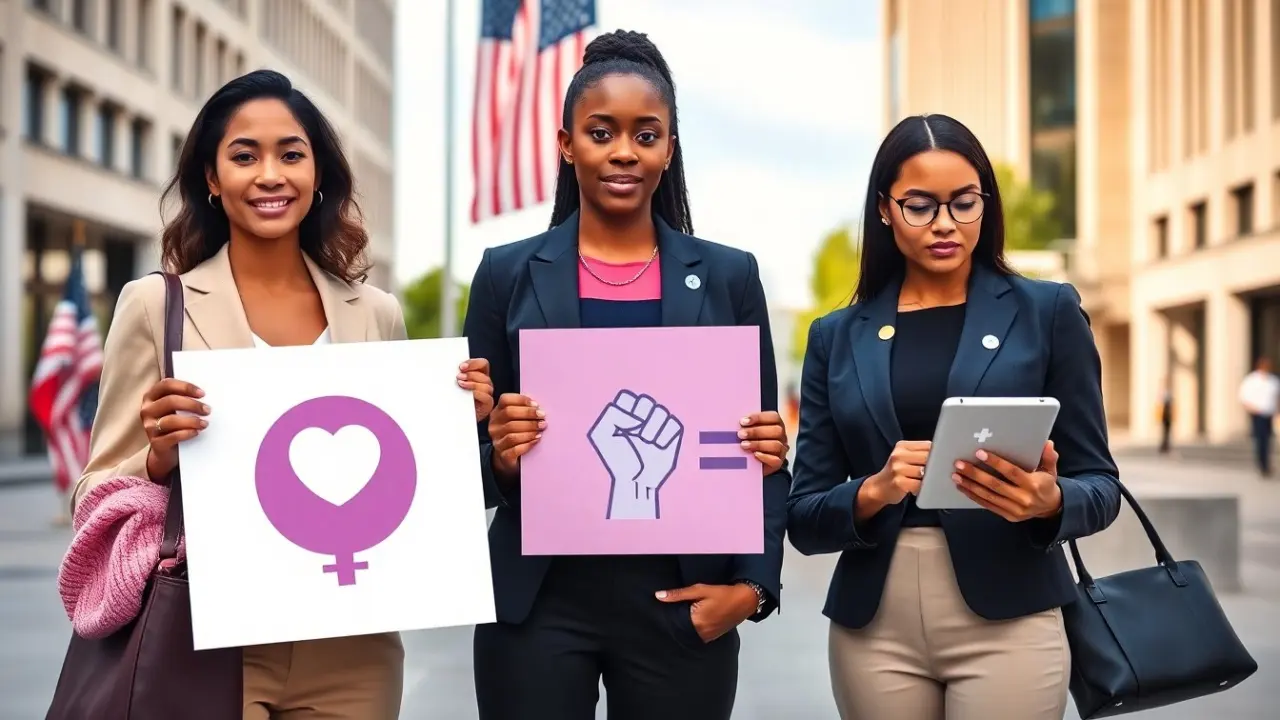
The raised fist served as a symbol of solidarity in many movements. Activists first used the raised fist in labor and anti-fascist actions in the early 20th century. Suffragists adopted clenched-fist imagery in the late 19th and early 20th centuries to show unity. The Venus symbol (a circle over a cross) linked to biology and later to women’s rights. Scientists used the Venus symbol to label the female sex. Feminists later used the Venus sign to show gender identity and political rights. The purple, white, and green tricolor tied to the British suffrage movement. Suffragists chose green for hope, white for purity, and purple for dignity. The color trio spread to other countries and campaigns. The labrys, a double-headed axe, connected to ancient matriarchal myths. Activists in the 1970s adopted the labrys to honor lesbian identity and strength. The sunflower and mirror motifs appeared in early feminist art. Artists used those images to question beauty standards and social roles. The daisy and sunflower also appeared in protest buttons and banners. Marches and parades carried banners with these motifs to make messages visible. The equality sign (=) became a simple modern icon. Activists and organizations used the equality sign to demand legal parity. The sign works well on signs, social posts, and shirts because it reads quickly. The abortion-rights coat hanger image grew out of a grim history. Activists used the image to warn about unsafe procedures before legal access. The image still appears in protests to emphasize the stakes of access. Each symbol holds specific history and emotion. People should learn the context before they display a symbol. Symbols gain power when people respect their origins.
Many of these symbols evolved through practice rather than by design: a recurring motif on a badge or a banner became shorthand for a wider campaign. That means symbols often carry layered meanings—some widely shared, some local or contested. For example, a color associated with one national movement may mean something different in another region. Understanding that layered history helps avoid accidental erasure of earlier uses and recognizes the people who created or popularized a sign.
Context also shapes meaning: the same symbol may be celebratory on a march, educational in a classroom, and controversial in political messaging. When tracing origins, look for primary sources—posters, photographs, pamphlets, and oral histories—since these show how people used symbols at the time. Museums, archives, and community groups commonly hold these materials and can be good starting points for research.
Contemporary Symbols, Campaigns, And Visual Language
Movements use simple symbols to spread messages online and in public. The red umbrella now marks sex workers’ rights. Activists adopted the umbrella to show protection and visibility. The pink pussyhat emerged during mass demonstrations in the 2010s. Protesters knit and wear the hat to claim space and show shared purpose. The hashtag functioned as a visual and textual marker for campaigns. Campaigns use hashtags to group posts and to raise visibility. #MeToo spread quickly as survivors used it to share experience and to push for change. The green scarf started in Latin America for abortion rights. Protesters wear green scarves in marches to show support for safe, legal abortion. Organizations pair the green scarf with facts to push law reform. The blue and purple gradient appears in many campaigns for gender equality online. Designers use gradients for social graphics and to link different messages. Health groups use icons that show a uterus, a heart, or a shield. Designers keep those icons clear and minimal so readers understand them fast. Logos and symbols also signal policy focus. Groups that work on legal reform often use columns or scales to show law and rights. Groups that work on health use stethoscopes and drop icons to show care and access. Campaigns use color and shape to reach audiences quickly. Visual consistency helps readers recognize a campaign across platforms. Present-day designers avoid offensive imagery and test symbols with diverse groups. They ask community members if symbols match lived experience. That step helps reduce harm and improves uptake. Online petitions and posters use clear symbols to invite action. Simple icons encourage people to share, donate, or attend events.
Contemporary visual language often blends old and new: historical symbols may be remixed with modern typography and layouts to reach social audiences. Visual shorthand—emoji, stickers, and simplified logos—helps messages travel fast, but it also risks flattening complex histories. Campaigns that succeed in the long term pair recognizable imagery with short clear messages and links to deeper information so newcomers can learn more.
There is also growing attention to accessibility and reproducibility. Designers consider how symbols read for people with visual impairments, how they reproduce in low-resolution formats, and how they appear in black-and-white photocopies or on fabric. Practical choices—high contrast, simple silhouettes, and avoiding thin strokes—help symbols remain legible across many uses. Campaign teams increasingly maintain basic style notes so volunteers and partners reproduce symbols consistently and respectfully.
Using Women’s Rights Symbols Respectfully And Effectively Today
People should learn history before they use women’s rights symbols. Groups should explain symbol meaning when they share images. Organizers should credit the origin and the community tied to a symbol. Designers should test symbols with the audience they aim to reach. That test shows whether a symbol feels timely and accurate. Activists should avoid appropriation of symbols from other groups. They should choose symbols that the represented group endorses. Fundraisers should avoid turning sacred symbols into mere merchandise. They should ask permission before they sell items with community icons. Educators should teach youth the origin and meaning of common symbols. Schools and museums can show primary sources, such as posters, pins, and photos, to ground the story. Journalists should label symbols and explain their use in reports. Clear captions help readers identify a symbol and understand its role in an event. Designers should use high-contrast colors and readable type for signs and graphics. That choice improves visibility at distance and online. Organizers should combine symbols with clear demands or actions. A symbol alone can inspire, but a call to action pushes change. When people document protests, they should avoid exposing vulnerable participants. Photographers should blur faces or get consent before sharing images widely. Communities should repair misuse by listening and changing course when critics raise concerns. Respectful use builds trust and keeps focus on rights and safety. Those practices help symbols stay meaningful and effective.
Practical checklist for respectful and effective use:
- Research: Confirm a symbol’s origins and common interpretations before adopting it.
- Credit: Acknowledge movements, groups, or communities associated with a symbol when possible.
- Test: Show designs to diverse members of the intended audience and adapt based on feedback.
- Accessibility: Use high contrast, clear shapes, and alternative text for digital images.
- Context: Always pair symbols with concise information or a clear call to action.
- Consent: Seek permission before using symbols created or closely held by specific communities.
- Repair: If misuse occurs, listen to affected communities and correct course publicly and promptly.
Finally, remember that symbols are tools, not substitutes for work. They can build visibility, create solidarity, and teach history, but sustained change requires organizing, policy work, and care for affected people. When used thoughtfully, women’s rights symbols help connect current campaigns to longer struggles and make complex ideas more accessible. When used carelessly, they risk erasing histories or harming the people they aim to support. Keeping context, consent, and clarity at the center of symbol use preserves their power and purpose.