Yoga for women over 50 offers clear benefits for strength, balance, and sleep. The program focuses on safe movement, steady breath, and gradual progress. It reduces pain, improves posture, and supports bone health through weight-bearing positions and functional movement patterns. The plan fits busy schedules and different fitness levels with short, repeatable sessions and clear progressions. It guides women to practice with confidence and to protect joints by emphasizing alignment, core support, and modifications. The writing keeps instructions simple and precise so women can start with minimal equipment and build routines that match energy, mobility, and recovery needs.
Key Takeaways
- Yoga for women over 50 enhances strength, balance, and bone health while reducing pain and improving sleep quality.
- Starting yoga safely involves health assessments, modifications for mobility limits, and mindful breath techniques.
- A balanced weekly yoga routine of 20–45 minutes supports steady progress through strength, mobility, and restorative practices.
- Gentle restorative yoga reduces stress and improves sleep, with props aiding comfort and recovery after active sessions.
- Using appropriate props and choosing experienced instructors ensures safe practice tailored to women over 50’s needs.
- Consult a doctor before beginning yoga if you have major health issues, and stop if experiencing sharp pain or severe symptoms.
Why Yoga Is Especially Valuable After 50
Women over 50 face muscle loss, bone loss, and slower reaction time. Yoga for women over 50 builds muscle and preserves bone through weight-bearing poses such as standing balances and gentle lunges, and by encouraging safe loading of the skeleton. It improves balance, which lowers fall risk, by training proprioception and ankle, hip, and core stability. Yoga for women over 50 also reduces stress hormones and supports sleep through regular breathwork and relaxation practices, which can be especially helpful during menopause and periods of hormonal change. The practice improves joint range of motion and eases stiffness from arthritis when movements are controlled and modified to pain-free ranges. Women often report better mood, more energy, and greater confidence in daily tasks after consistent practice. Doctors often recommend moderate, consistent exercise, and yoga for women over 50 fits that advice by combining strength, mobility, and aerobic elements when appropriate. The key is steady, regular practice, small measurable progress, and tailoring intensity to current health and recovery needs.
How To Start Safely: Assessments, Modifications, And Breath
A simple health check helps women begin safely. She should discuss major health issues with her doctor before starting yoga for women over 50, and get clearance for activities that raise heart rate or load bones. A basic mobility test—such as checking ankle dorsiflexion, hip hinge, and shoulder reach—shows where to modify poses and whether to use chairs, blocks, or straps. Teachers should offer chair options, wall support, blocks, and strap adjustments; for example, a chair-supported warrior 2 or half-squat can substitute for deeper stances. Breath instruction matters: exhale on effort and inhale on release, practice diaphragmatic breathing, and learn simple calming techniques like box breathing or extended exhales. Yoga for women over 50 uses slow, controlled movement and shorter holds at first to assess tolerance; progress to longer holds or more repetitions as strength and confidence increase. She should stop if she feels sharp pain, dizziness, or chest tightness and consult a clinician for any worrying symptoms. Rest between sets and days with high intensity reduces fatigue and protects joints. Progress should come in small, weekly steps, with regular notes on pain, balance time, and functional gains to guide safe progression.
A Balanced Weekly Routine (20–45 Minutes Per Session)
A balanced routine mixes mobility, strength, and recovery across three to five sessions per week. Week plans can include two strength days focused on standing balances, supported lunges, and gentle core work; one mobility day with hip and thoracic rotations and ankle work; and one gentle flow or restorative day with longer breathing and relaxation. Sessions should last 20–45 minutes based on energy and schedule, with shorter sessions on busy days and slightly longer sessions when time allows. Women can increase duration by five minutes every two weeks or add an extra set of repeats for progressive overload. Yoga for women over 50 benefits from consistency, not intensity: steady, manageable practice yields more lasting improvements than occasional strenuous sessions. She should track progress with simple notes: posture, balance time, and pain levels, and include objective markers such as single-leg stand time or number of chair rises. Rest days matter: they allow muscles and bones to adapt and reduce the risk of overuse. The routine should feel sustainable and safe, with clear options to scale up or down depending on sleep, stress, and pain that week.
Gentle Restorative Practices For Stress, Sleep, And Recovery
Breathwork calms the nervous system and lowers heart rate when practiced regularly; simple practices like 4–6 deep belly breaths or paced exhalations can be used before bed or during stressful moments. Legs-up-the-wall reduces swelling and aids venous return after long periods of standing or travel, and supported reclined poses relieve lower back tension. Guided relaxation or a short body-scan relaxes muscles and supports sleep onset by shifting focus away from racing thoughts. Short bedtime sequences with gentle stretches—neck rolls, seated twists, and knee hugs—ease nighttime stiffness without overstimulating the system. Yoga for women over 50 benefits from 10–20 minutes of restorative practice after active sessions to assist recovery and reduce delayed soreness. Props help hold poses with minimal effort so the body repairs: a bolster under the knees, blankets under the head, or blocks under the hands make restorative postures accessible. Progressive muscle release and mindful rest reduce chronic tension and can improve sleep quality when used consistently. Consistent gentle practice creates a clearer sleep pattern, lowers daily stress, and supports long-term recovery between more active days.
Practical Tips: Props, Class Types, And When To See A Doctor
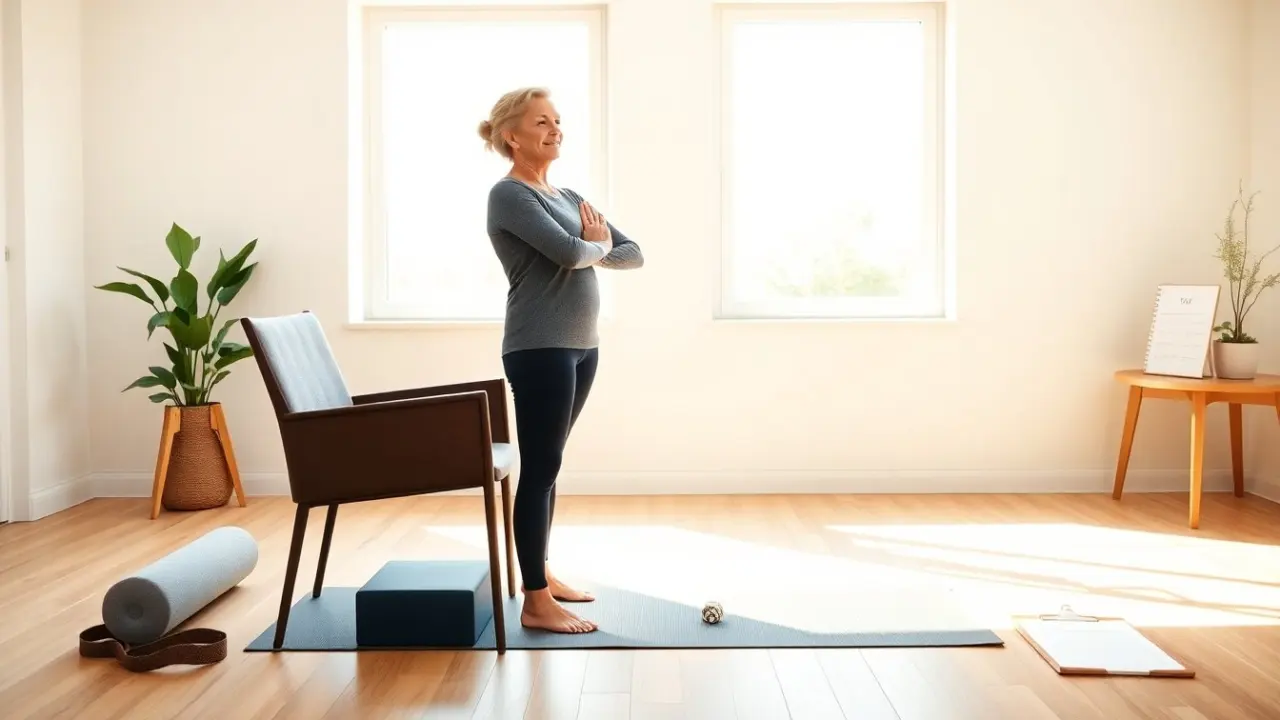
Use a non-slip mat, a firm chair, two blocks, a strap, and a bolster or folded blanket to make poses accessible and safer. Start with a beginner or 50+ class that offers clear modifications and a slow pace; many studios and online platforms list class descriptions so you can pick sessions labeled restorative, gentle, or senior-friendly. Choose instructors with experience teaching older adults or with training in therapeutic approaches; ask instructors in advance about modifications for osteoporosis, knee replacements, or limited shoulder mobility. Try online classes for convenience but pick slower-paced teachers who cue alignment and offer variations, and consider live small-group classes for personalized feedback. See a doctor before starting if she has uncontrolled blood pressure, recent surgery, active cardiac issues, or a history of fractures. Seek physical therapy first for major joint replacements, recent falls, or neurological symptoms to get a tailored movement plan. Stop and consult a clinician for new, severe pain, sudden swelling, unexplained shortness of breath, or signs of infection. Keep notes to guide adjustments, record what felt helpful or problematic, and share them with instructors or clinicians to refine a safe, effective practice plan.