The best beginner workout plan for women starts with three full-body strength sessions a week, with recovery days between them, and adds load one small change at a time.
If your week is already crowded, our work life balance tips for women show how to make room for training around everything else.
Why three full-body sessions suit a beginner
Three strength workouts per week is a practical starting point for many beginners because it leaves recovery time between sessions, according to a beginner gym routine from 10 Fitness. The same routine trains three days each week, uses simple full-body movements, and fills the days in between with light cardio or mobility. Full-body sessions matter at the start because every movement gets practised often, and nothing is saved for a separate “leg day” that you might miss.
The spacing is the mechanism that makes the plan work. A Simple Life beginner guide notes that strength and fitness gains happen on recovery days, so the rest between sessions is part of the training rather than time off from it. That is why the routine asks for at least one recovery day between strength sessions. If you are tempted to train on consecutive days because you feel motivated, a lighter day will usually serve you better.
Strength work also does more than build muscle. The same guide says muscle protects bone and lifting makes bones themselves denser and stronger. A TODAY beginner strength plan adds that strength-training exercises improve bone density and increase flexibility in the joints. For a beginner, those benefits are a good reason to treat consistency as the goal, ahead of intensity.
The weekly plan at a glance
Use the same weekly pattern for the whole month and change only the volume. Week 1 is for learning the movements, and the later weeks add work gradually.
| Stage | Sessions | Sets and reps | Planning use |
|---|---|---|---|
| Week 1 | Three full-body strength sessions | 2 sets of 8 to 12 reps per exercise | Pick weights you can control so the movement pattern is the focus. |
| Weeks 2 to 4 | Three full-body strength sessions | 2 to 3 sets of 8 to 12 reps for strength movements | Move toward the third set or the top of the rep range only when form stays steady. |
| Days between sessions | Light cardio or mobility on alternate days | No set targets | Keep at least one recovery day between strength sessions. |
Figures come from a beginner gym routine published by 10 Fitness.
Take about 60 to 90 seconds between sets, and longer whenever you need it. Rushing the rest shortens the sets that follow and makes form slip, so a longer pause is a sensible adjustment and not a failure of the plan.
Building each session
Warm-up and order of work
Begin every session with 5 to 10 minutes of walking, cycling or another easy cardio machine, as the 10 Fitness routine suggests. A 1st Phorm full-body routine for women also begins with 5 to 10 minutes of light cardio to get your heart rate up. Treat the warm-up as part of the session, because it is the easiest piece to skip when time is short and the cheapest way to start with a ready body.
Choosing movements
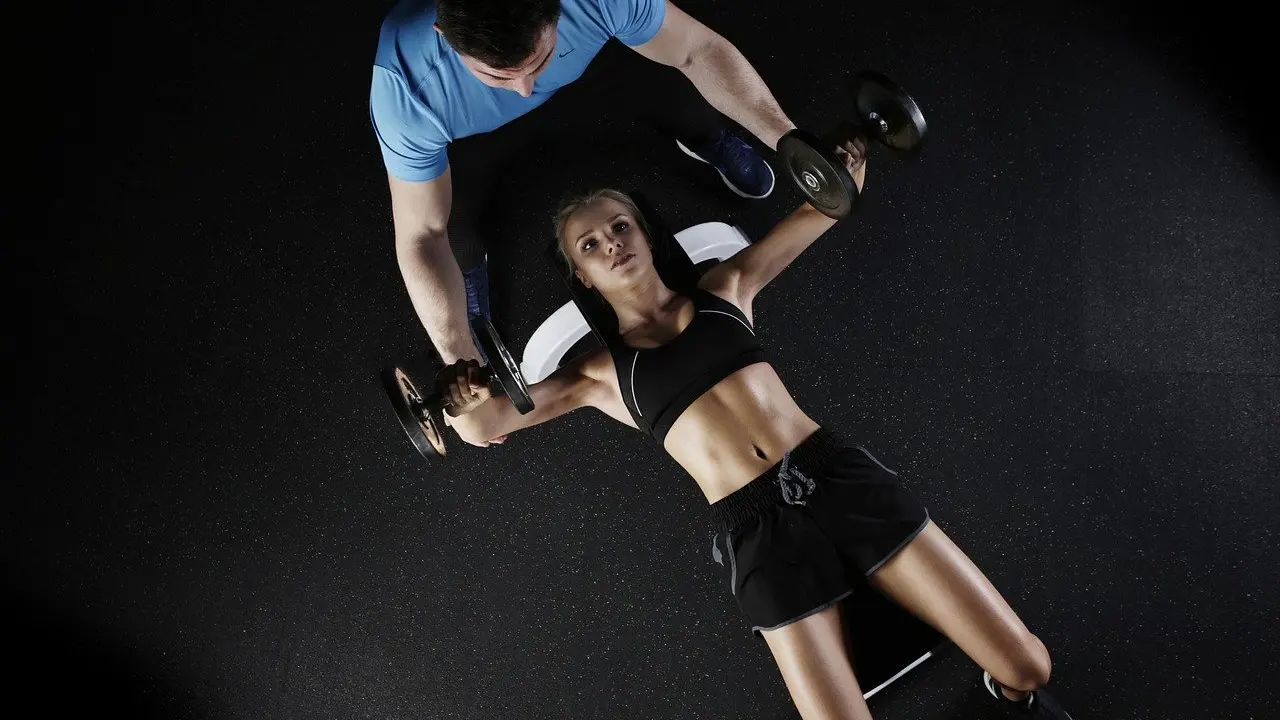
Pick a few simple movements and repeat them, rather than collecting new exercises each week. The 10 Fitness routine alternates two workouts. Workout A starts with machine work such as the leg press and seated chest press. Workout B uses a squat variation you can control, a seated row, a shoulder press, a glute bridge, and a carry or core exercise. The mix covers legs, push, pull and trunk in every session, so no part of the body is left out.
- Machines: they can make it easier to learn a controlled movement, which suits a gym beginner who is unsure about technique.
- Bodyweight: push-ups, squats and lunges need no equipment, and the Simple Life guide describes its bodyweight options as suited to home workouts.
- Dumbbells: light weights let you load the same patterns once the bodyweight versions feel controlled.
If you are training at home and want a longer-term structure, the At-Home Workout Plan For Women: 30 Minutes A Day To Build Strength, Burn Fat, And Feel Confident In 8 Weeks – Platformwomen continues from this starting point.
Fitting training around work
A busy schedule is best handled by protecting three fixed slots, not by chasing a perfect routine. Because the plan needs only three strength days, you can place them on the days with the most predictable hours and keep the days in between flexible for lighter movement.
Walking is the easiest filler. The TODAY plan says that three, ten- or 15-minute bursts is equally as effective as one longer walk, and that you can break walking up throughout the day. That makes a lunch break, a stop on the way home and an evening loop all count on a day when a single long walk is impossible.
When a strength session gets missed, resist the urge to compensate. The 10 Fitness routine is explicit: do not double up two hard workouts to catch up. Carry on with the next scheduled session instead, so the recovery days between hard efforts stay intact. For wider ideas on protecting time and energy across the week, see the work life balance tips for women collection.
Progressing safely
Safe progress comes from changing one thing at a time. The 10 Fitness routine advises changing only one part at a time so you know what works for you, for example adding one rep or making a small weight increase. If you add reps, sets and weight in the same week, you cannot tell which change made a session feel too hard.
Tracking makes this practical. Record your sets, reps and weight so you can progress slowly, and treat a repeat of last session’s numbers with better form as a perfectly good outcome. A short note on your phone is enough.
Pain is the clear stopping rule. If an exercise causes pain or you have a health concern, stop and ask a qualified professional for guidance. That applies to any movement in the plan, and it is a better response than pushing through for the sake of finishing the programme.
Readers who want a progression written for later life stages can continue with Strength Training After 40: A Practical, Safe Guide For Women To Build Strength, Bone Health, And Energy – Platformwomen.
Recovery days
Recovery days are where the plan’s gains show up, so plan them as deliberately as the workouts. Simple Life notes that a slow, easy walk can shake out sore muscles, which makes walking a reasonable default for the days between lifting sessions. Light cardio or mobility work suits the same purpose, and neither should feel like a second hard workout.
Keep the effort easy enough that you could hold a conversation, and treat extra soreness as a cue to slow down rather than push. When the next strength day arrives, you should feel ready to repeat the same movements with good form.
Frequently asked questions
Will strength training make me bulky?
Unlikely. The Simple Life guide says increasing muscle size is pretty hard to achieve for women, so a beginner plan of controlled sets is aimed at strength and confidence rather than dramatic size change.
How heavy should my first dumbbells be?
The TODAY plan recommends starting with 3-pound dumbbells unless you have used weights before. Light weights give you room to practise form before you add load.
Is 8 to 12 reps the only rep range?
No. The TODAY plan uses 10 repetitions of each exercise for three rounds, and a female beginner routine on Jefit suggests 12 to 14 repetitions per exercise. The 8 to 12 range in this plan is a sensible middle ground; pick one and stay with it long enough to compare weeks.